
 English
  Spanish
  Portuguese
  German
  Italian
  Japanese
  French
  Polish
  Russian
  Netherlands
  Hungarian
  Turkish
  Videos
  Thedink Pickleball

The forehand slap is one of the most effective offensive weapons in pickleball, but most players are doing it wrong. Here's how to generate effortless power and finish points with confidence.
The forehand slap is one of the most underrated offensive weapons in pickleball, yet it's also one of the most commonly botched shots on the court.
If you're struggling to generate power for putaway shots, the problem likely isn't your strength or athleticism. It's your technique.
Subscribe to our free newsletter
According to APP pro and content creator Tanner Tomassi, you can master the fundamentals of this shot in under 60 seconds.
The key isn't complicated mechanics or years of practice. It's understanding three simple principles that separate players who can finish points from those who keep leaving balls in the net.
Love pickleball? Then you'll love our free newsletter. We send the latest news, tips, and highlights for free each week. Subscribe to our free newsletter
Why Your Forehand Slap Isn't Working
Most pickleball players fail with the forehand slap because they're overthinking it. They take a massive backswing, thinking more movement equals more power. Wrong. That's actually how you mishit the ball entirely.
The biggest mistake is the setup.
- When you're preparing to hit a putaway shot, your paddle should already be out in front of your body.
- You're not loading up like you're hitting a tennis serve.
- You're positioning yourself to swing through the ball with minimal preparation.
💡
Unlike an overheard smash, the forehand slap is a compact, violent putaway motion used on balls hanging just above shoulder level.
Think of it this way: the forehand slap is about efficiency, not effort. Your body should be lined up, your paddle should be ready, and your only job is to think about swinging through the court. That's it.
The Three-Step Formula for Effortless Power
Step One: Eliminate the Huge Backswing
The first principle of a proper forehand slap is counterintuitive. You don't want a huge backswing. In fact, you want the opposite.
Line up with your paddle already out in front of your body. Your paddle should be positioned as if you're already halfway through your swing. From there, your only movement is forward and through the ball. You're never taking the paddle back for this shot.
This positioning does two things.
- First, it forces you to be more accurate because you have less room for error.
- Second, it naturally generates power through acceleration and follow-through rather than through a long, slow backswing.
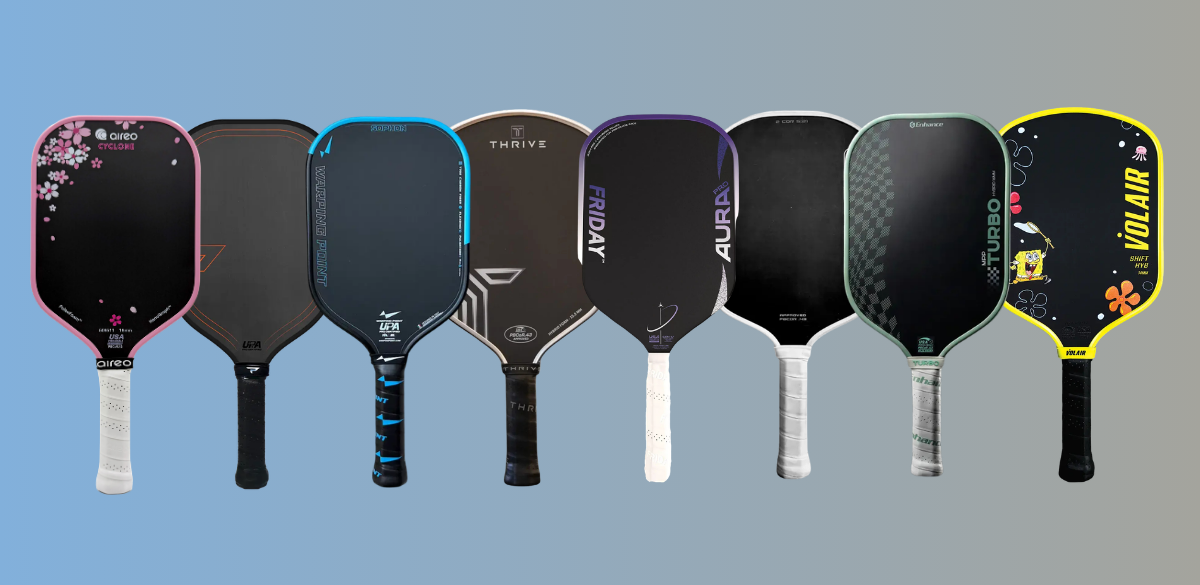
9 New Pickleball Paddles Worth a Second Look
With the paddle market moving so fast these days, you’d be forgiven for not knowing what’s new and noteworthy. Fear not – we’ve got you covered.
 The Dink PickleballAlex E. Weaver
Step Two: Swing Across, Not High to Low
The second mistake players make is their swing path. Most people swing from high to low, thinking they need to hit down on the ball to generate power. This almost always sends the ball into the net.
Instead, think of swinging across the court and completely through it. Your swing path should be more horizontal than vertical. It's a subtle difference, but it makes a huge difference in results.
When you swing across and through, you're using the court as your target line. You're not trying to hit down on the ball. You're trying to hit through it toward the opposite baseline. This swing path naturally keeps the ball in the court while generating the power you need for a putaway.
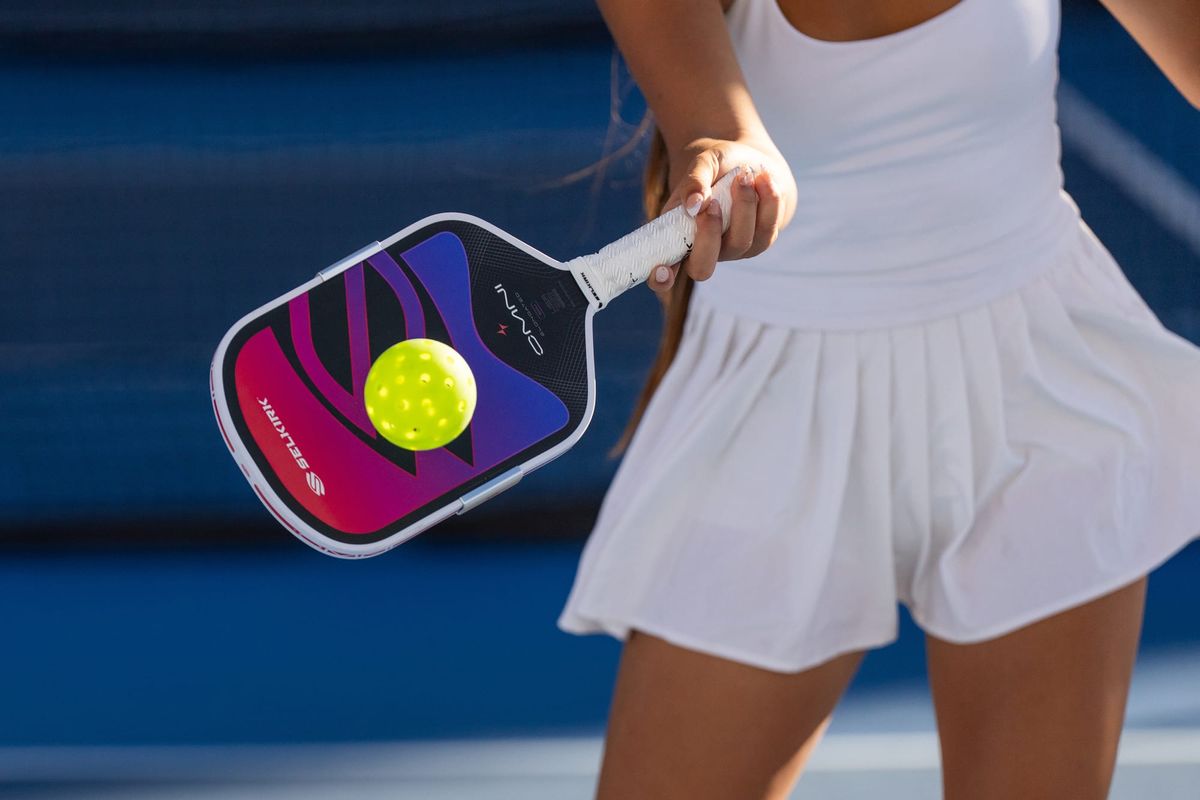
Photos: Selkirk Omni Debuts as Successor to the Boomstik
An all-court, full-foam paddle that will debut in a range of shapes and colors.
The Dink PickleballAlex E. Weaver
Step Three: Keep Your Arm Loose and Whippy
The third and final principle is all about arm tension. Your arm should be extremely loose and whippy during the forehand slap.
Think of the motion like cracking a whip. That's how loose your arm should be. The power doesn't come from muscling the ball. It comes from the whip-like motion of your arm accelerating through the shot.
💡
That power generates from your legs, through your core and shoulder rotation, and should explode out through your arm.
This is where a lot of recreational players get it wrong. They tense up, grip the paddle tightly, and try to muscle the ball. That creates mishits and inconsistency. Instead, keep your grip relaxed, let your arm whip through the shot, and let the paddle do the work.
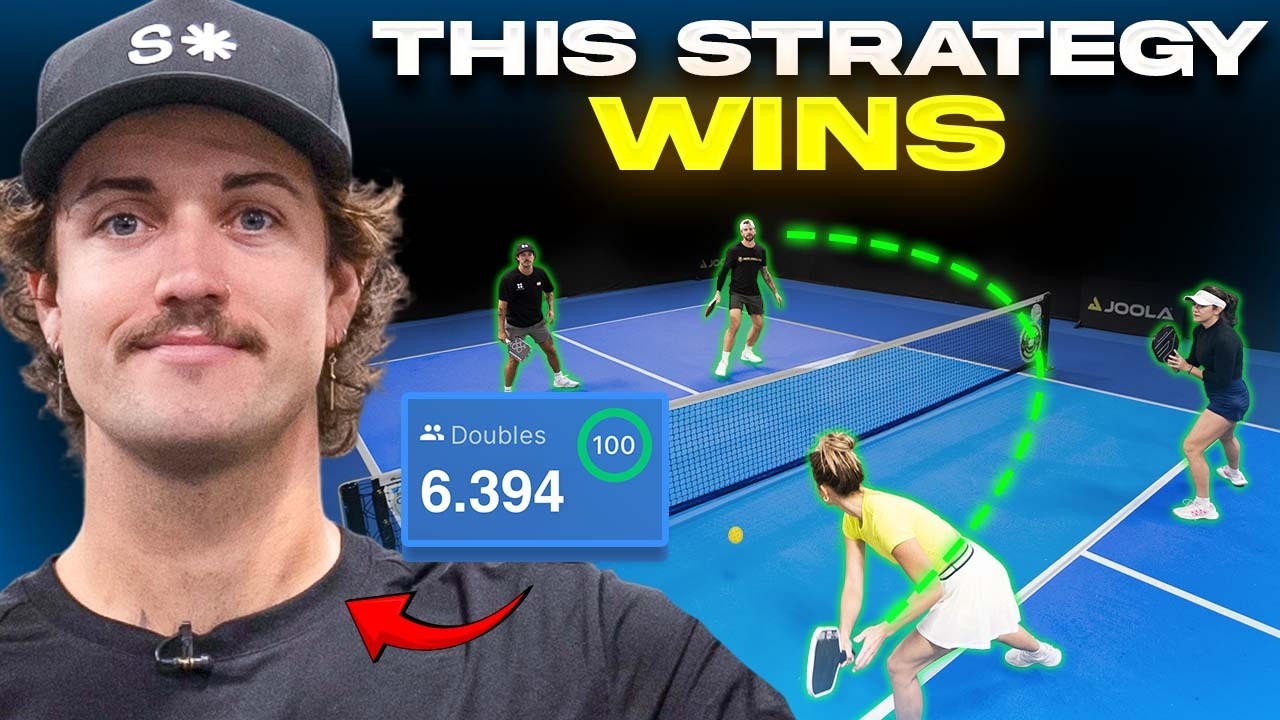
10 Pickleball Doubles Strategy Mistakes Beginners Make
Most pickleball doubles players lose points not because of bad shots, but because of poor positioning, weak communication, and lack of structure. Here are the 10 pickleball doubles strategy mistakes that separate casual players from consistent winners.
The Dink PickleballThe Dink Media Team
Putting It All Together
Once you understand these three principles, the forehand slap becomes one of your most reliable offensive shots. You're not relying on raw power or perfect timing. You're relying on sound technique and proper positioning.
The beauty of this approach is that it works for players of all levels. Whether you're a beginner just learning the game or an intermediate player looking to tighten up your technique, these three steps apply. The forehand slap is fundamentally about efficiency and proper mechanics, not athleticism.
Start practicing with these principles in mind.
- Focus on your setup first.
- Make sure your paddle is out in front before you even think about swinging.
- Then work on your swing path.
- Practice swinging across the court rather than high to low.
- Finally, loosen up your arm and let it whip through the shot.
Within a few practice sessions, you'll notice a dramatic improvement in your ability to finish points. The forehand slap will become a weapon you can rely on, not a shot you dread.
Heads up: hundreds of thousands of pickleballers read our free newsletter. Subscribe here for cutting edge strategy, insider news, pro analysis, the latest product innovations and more.
Frequently Asked Questions
What's the difference between a forehand slap and a forehand drive in pickleball?
A forehand slap is an offensive putaway shot designed to finish points, while a forehand drive is a more aggressive baseline shot used during rallies. The slap uses a shorter, more compact swing with the paddle already positioned in front of your body. The drive involves more of a full swing and is used when you have more time and space.
Can beginners learn the forehand slap?
Absolutely. The forehand slap is actually easier for beginners to learn than many other pickleball shots because it doesn't require a big backswing or complex footwork. Focus on the three fundamentals: minimal takeback, swinging across the court, and keeping your arm loose. Most beginners see improvement within a few practice sessions.
How do I know if I'm swinging too high to low?
If your forehand slap consistently goes into the net, you're likely swinging high to low. Pay attention to your swing path. Your paddle should move more horizontally across your body than vertically downward. Record yourself or have a friend watch to confirm your swing path.
Should I use the same grip for the forehand slap as other forehand shots?
Yes, you should use your standard forehand grip for the forehand slap. The difference isn't in your grip; it's in your arm tension and swing path. Keep your grip relaxed and let your arm whip through the shot rather than muscling it.
How often should I practice the forehand slap?
Incorporate the forehand slap into your regular practice routine at least 2-3 times per week. Spend 10-15 minutes focusing specifically on the three principles. Consistency matters more than duration, so regular, focused practice beats occasional long sessions.
Anuncie Aqui / Advertise Here
Sua marca para o mundo Pickleball! / Your brand for the Pickleball world!





 English (US) ·
  Portuguese (BR) ·