
 English
  Spanish
  Portuguese
  German
  Italian
  Japanese
  French
  Polish
  Russian
  Netherlands
  Hungarian
  Turkish
  Videos
  Thedink Pickleball

Pickleball court coverage with a partner of different height works best when splitting by reach and recovery rather than down the middle. Give the taller player overheads, the shorter player low balls and quick hands, and the seam stops leaking points.
Pickleball court coverage with a partner of different height is the problem nobody warns you about until you're down 4-9 and your teammate's shoulder is two feet above yours.
You split the court in half because that felt fair.
The ball found the seam anyway. Then it found it again. Covering the middle is hard enough when you're the same size.Here's the thing: fair and effective are two very different things in doubles, and the fastest way to fix a leaky middle is to stop dividing the court evenly and start dividing it by who can actually get there.
Love pickleball? Then you'll love our free newsletter. We send the latest news, tips, and highlights for free each week.
Why Does Pickleball Court Coverage With a Partner of Different Height Change the Math?
Because the court doesn't shrink, but your reach does.
A pickleball court is 20 feet wide and 44 feet long with a 7-foot kitchen on each side, and those numbers don't care how tall either of you are.Pickleball court coverage with a partner of different height comes down to that fixed space and two different sets of arms.
What changes is how much of that space each player can cover without moving, and how much they have to cover by sprinting.
Footwork closes the difference more than height creates it.
That gap has a name on this site.
The seam is the strip of court between two partners that neither one owns by default, and it moves depending on who's standing where.
With two players of similar height, the seam sits close to the centerline.
Pair a 6'3" player with a 5'4" player and it drifts, because the taller partner is covering more real estate standing still.
If you've read our breakdown of who covers the middle in pickleball doubles, this is the same idea with an extra variable bolted on.One data point worth knowing: a 2025 Pickleball Pro League analysis found that taller players spend roughly 65% of rallies at the net while shorter players split time more evenly between the baseline and the kitchen.
That's a tendency, not a rule. But it tells you something useful about where each of you is probably most comfortable, and comfort is worth building around.
Start With the Forehand, Then Adjust for Reach
The forehand still takes the middle.
Height doesn't override that, and it's the first thing to settle when you're planning pickleball court coverage with a partner of different height.
In a righty-righty team, the left-side player covers the middle with their forehand while the right-side player sets them up and stays honest to the sideline.That's the baseline rule, and it holds whether your partner is six inches taller or six inches shorter. What height changes is the margin.
A taller partner with the middle forehand can poach a foot or two further across before they're overreaching.
A shorter partner should stay tighter to their own lane and trust their hands instead of their wingspan.
Our notes on getting on the right side of your doubles partner walk through the side-selection logic.
💡
Need some new pickleball gear? Get 20% off select paddles, shoes, and more with code THEDINK at
Midwest Racquet SportsHow Do You Handle Pickleball Court Coverage With a Partner of Different Height at the Kitchen Line?
Move together, two arm's lengths apart, every single time.
Pickleball court coverage with a partner of different height falls apart at the kitchen when one player stops matching the other's slide.
This is the non-negotiable. When one of you slides, the other slides.
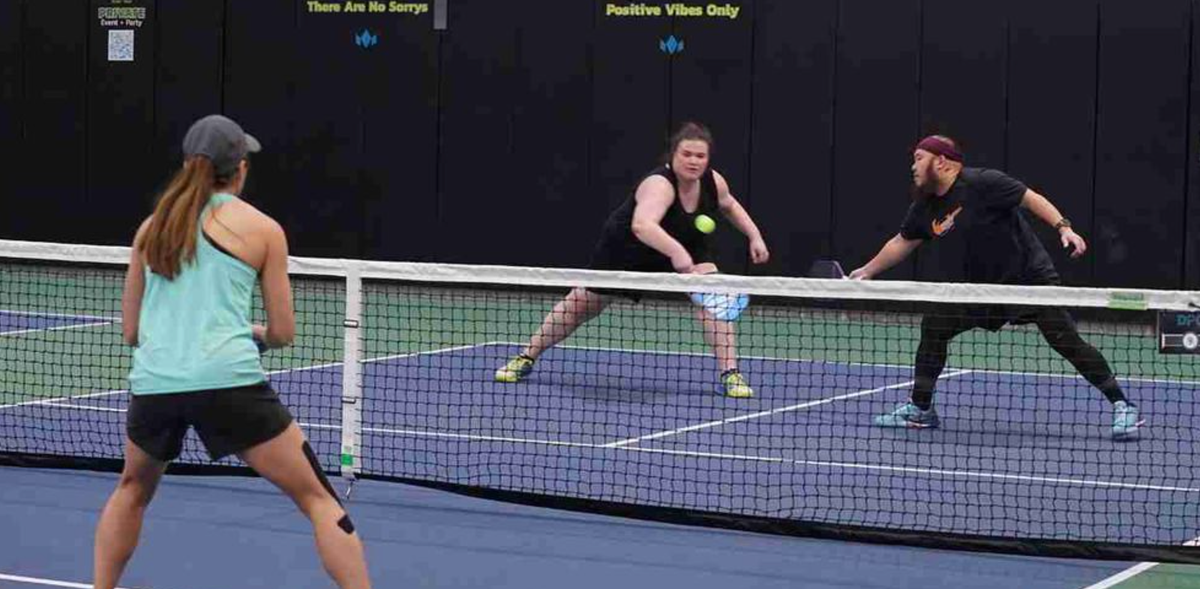
Coaches call it moving like you're tied to a string, and it matters more when you're mismatched, not less, because the taller player's natural instinct is to reach instead of step.Reaching is the trap. A tall player who leans for a ball instead of moving their feet leaves a hole behind them that the shorter partner has no chance of filling.
Our guide to proper spacing at the kitchen line covers the footwork, and it's worth ten minutes of drilling.
What If One Partner Keeps Getting Caught in the Transition Zone?
The shorter partner usually gets there faster, so let them lead.
Lower center of gravity means quicker first steps and better balance on low resets, which is exactly what the midcourt demands.
Give them the two-position reset responsibility and let the taller partner arrive a beat behind with their paddle up.Honestly, this is where most mismatched teams lose the rally.
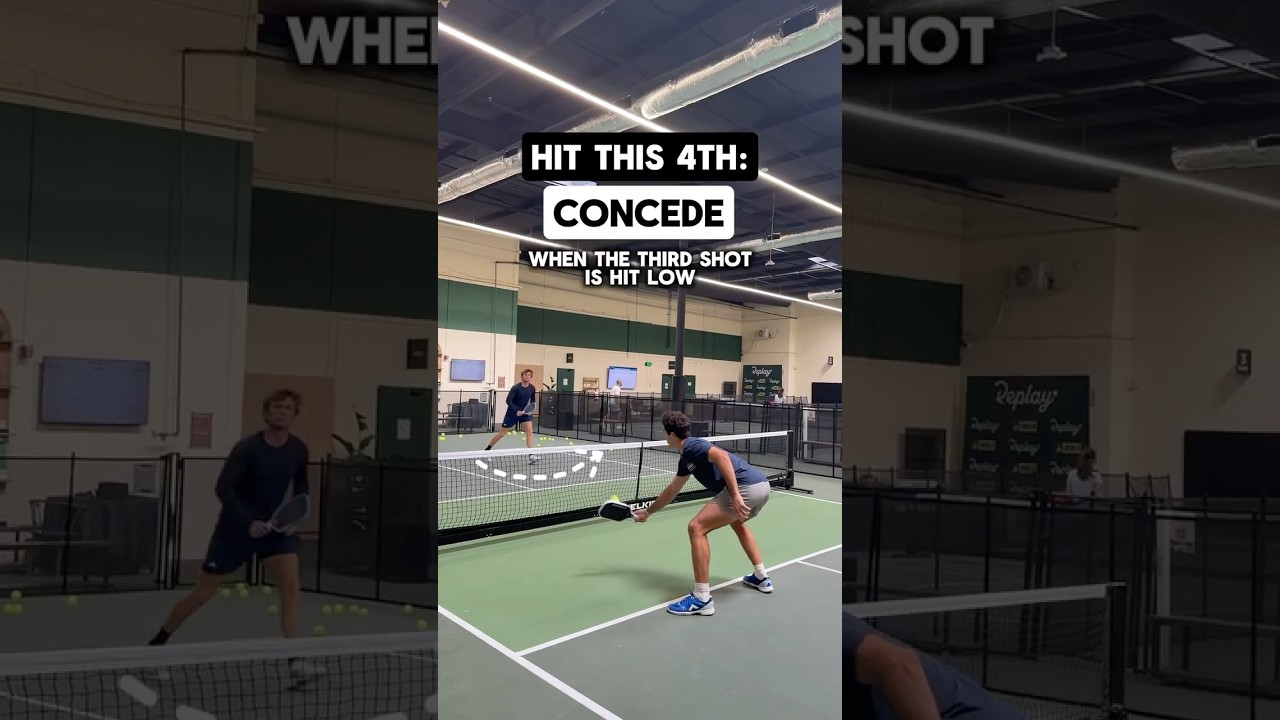
Not at the kitchen, not at the baseline, but in the awkward middle where nobody's decided who's driving. The 4th shot is usually where that decision gets exposed.
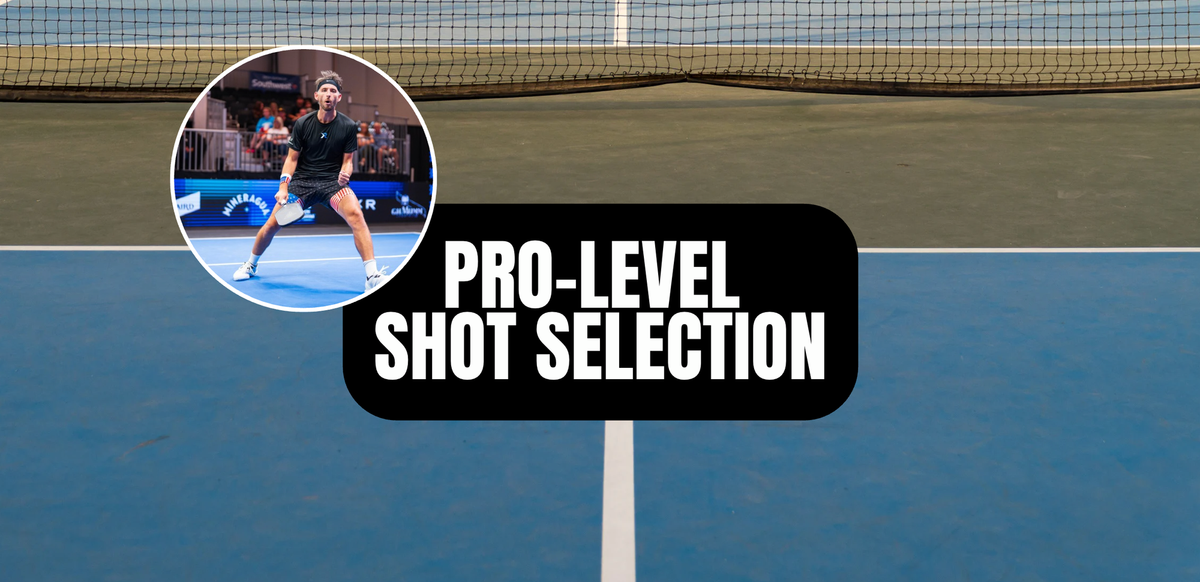
Pickleball Shot Selection: Ball Height & Court Positioning
Advanced pickleball means constantly analyzing the height of the ball and the court positioning off all four players in real time – and keeping this one rule sacred: just because you can hit a more aggressive shot doesn’t mean you should
 The Dink PickleballEric Roddy
Give the Tall Partner the Sky. Give the Short Partner the Low Ball.
This is the single cleanest division you can make in pickleball court coverage with a partner of different height, and it takes about fifteen seconds to agree on.
Lobs, overheads, and anything above shoulder height belong to the taller player. They get there with fewer steps and they finish with more paddle speed.Your job as the shorter partner is to call it early and clear out, not to contest it.
The complete lobbing guide explains why opponents target the shorter player in the first place.
Read our lob defense guide if you're the one currently backpedaling into trouble, and work on better overhead smashes if you're the one who should be putting those away.Low balls flip the assignment.
Dinks, drop shots, and anything below the net band are the shorter player's territory, because bending is cheaper for them and their eye line is already closer to the contact point.
That's a real advantage at the kitchen, and dink placement is where it pays off.
Say it out loud before the match: "You've got everything high, I've got everything low."That one sentence prevents more collisions than any amount of on-court apologizing, and it beats settling it mid-rally.
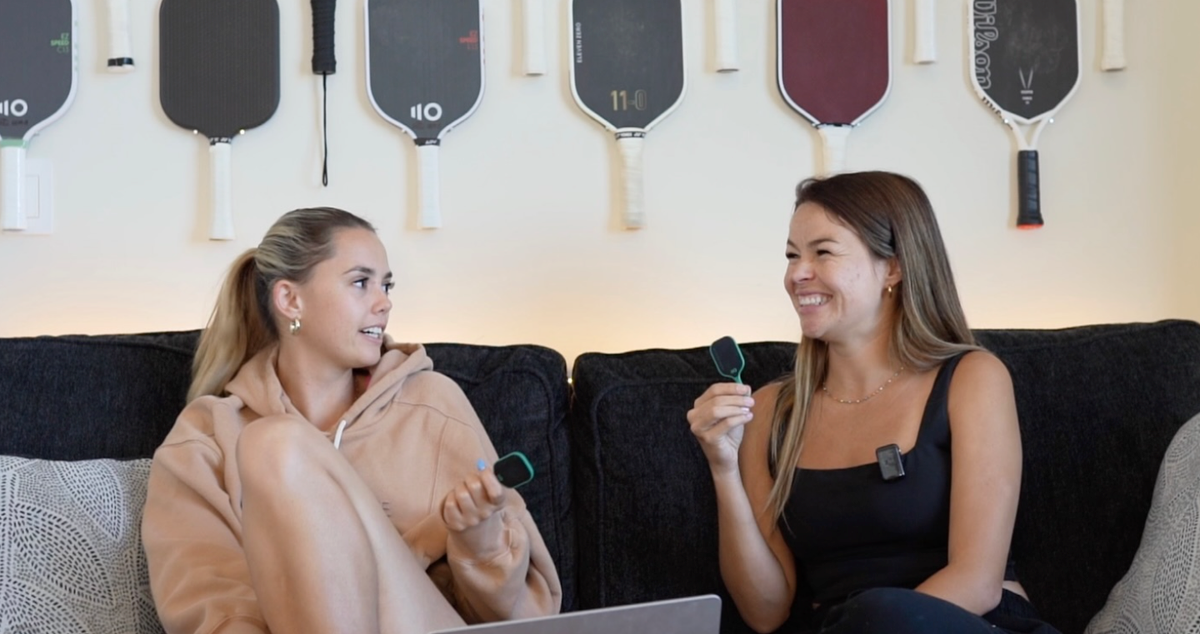
Pickleball Doubles Partner Etiquette: How Pros Do It
PPA pros Ava Ignatowich and Camila Zilveti explore the messy, complicated, and surprisingly human side of locking down a doubles partner event after event
 The Dink PickleballThe Dink Media Team
Pickleball Court Coverage With a Partner of Different Height Gets Simpler When You Stack
Stacking lets you keep both players in their best position regardless of who serves, which is why it solves so much of pickleball court coverage with a partner of different height in one move.
If your taller partner is the stronger net presence and your shorter partner is the better returner, stacking keeps that arrangement intact for the whole game instead of flipping it every other point.
Start with doubles stacking 101 if you've never run it, then look at nontraditional stacking setups once you're comfortable.The point isn't to look clever. It's to stop wasting half your points with the wrong person in the wrong spot.
One caution: stacking adds communication load. If you and your partner already struggle to call balls, fix teamwork basics first.Stacking on top of confusion just creates faster confusion.
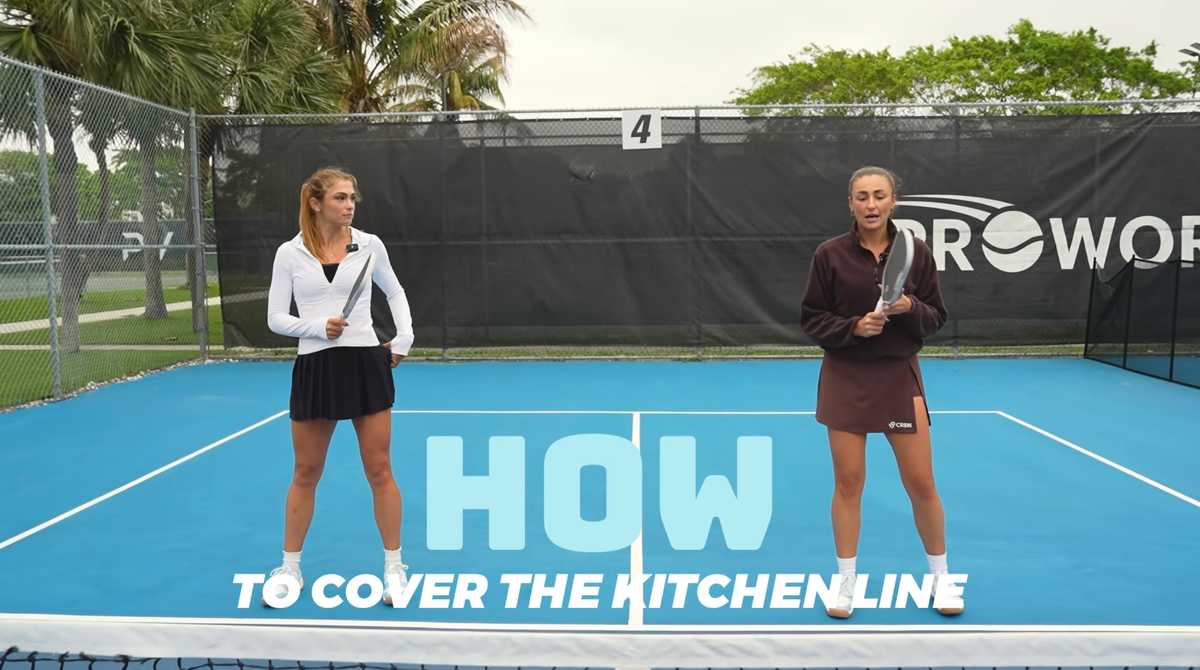
Master Court Coverage in Pickleball Doubles
Court coverage is one of the most misunderstood aspects of pickleball doubles, but the Walker Sisters break down exactly how to fix your positioning at every level of the court. From the baseline to the kitchen line, here’s what you need to know about court coverage to instantly level up your game.
 The Dink PickleballThe Dink Media Team
Three Things to Settle Before the First Serve
Mismatched teams win by deciding early, not by figuring it out mid-rally. Run through these before the coin toss:
- Who takes the middle? Forehand rule first, then adjust a foot either way for reach.
- Who takes the lob? Taller partner by default, unless they're the weaker overhead.
- Who calls the ball? Pick one voice. Two people yelling "mine" is the same as nobody calling it.
Our list of questions to ask your partner before a match goes deeper, and it's a five-minute conversation that saves you three games.
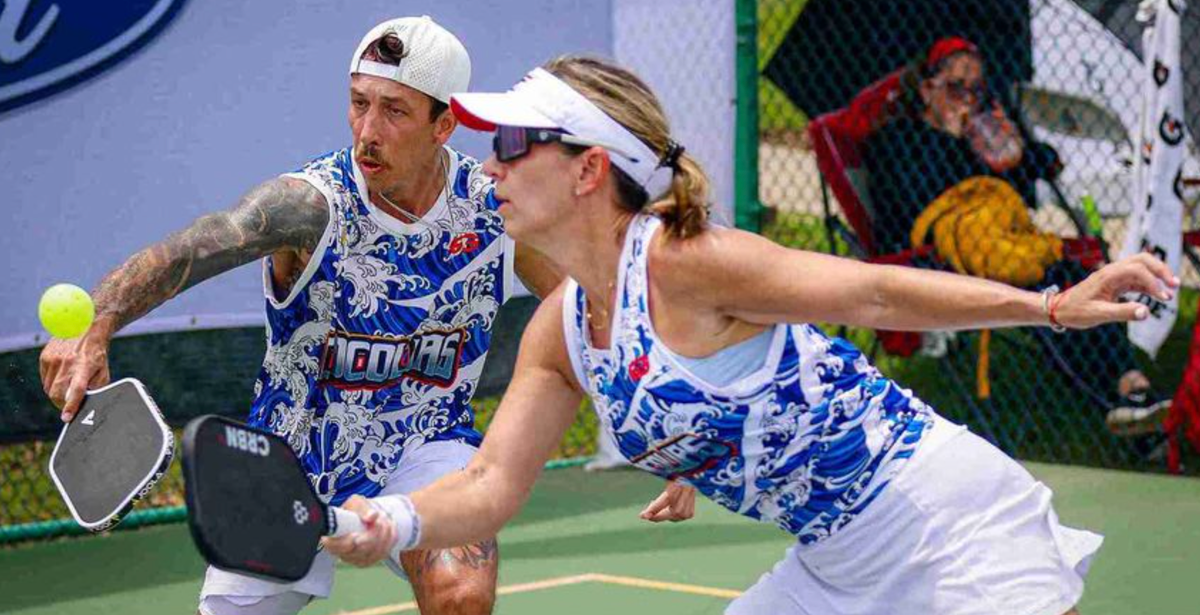
Competitive Doubles Strategy 4.0 Pickleball: Patterns That Win
Competitive doubles strategy 4.0 pickleball is less about hitting harder and more about controlling patterns, court positioning, and forcing opponents into losing situations.
 The Dink PickleballThe Dink Media Team
When the Height Gap Is Also a Skill Gap
Sometimes the shorter partner is just newer. Sometimes the taller one is. Height and skill get tangled together in rec play, and pretending otherwise costs you.
Good pickleball court coverage with a partner of different height accounts for both.
If your partner is genuinely the weaker player, coverage shifts again: the stronger player takes more court, and the weaker one protects their lane and stays out of the way.We wrote a full breakdown on playing with a weaker partner, and it pairs well with protecting your partner without poaching.
There's a line between covering for someone and stealing their confidence. Stay on the right side of it.
And if you want the broader tactical picture, our advanced doubles strategy guide sits one level up from all of this.
Pickleball Shot Selection: 3 Ball Height Rules That Work
Most players lose points not because they hit bad shots, but because they hit the wrong shot at the wrong height. These three pickleball shot selection rules fix that instantly.
 The Dink PickleballThe Dink Media Team
Key Takeaways
- Pickleball court coverage with a partner of different height should be split by reach and recovery speed, not by the centerline.
- The forehand still owns the middle; height only adjusts the margin by a foot or so in either direction.
- Move together at roughly two arm's lengths apart, and step instead of reaching.
- Taller partner takes everything high. Shorter partner takes everything low.
- Stacking protects the arrangement, but only if your communication is already solid.
💡
Heads up: hundreds of thousands of pickleballers read our free newsletter.
Subscribe herefor cutting edge strategy, insider news, pro analysis, the latest product innovations and more.
Frequently Asked Questions
Should the taller player always play the left side?
No. Side selection is driven by the forehand, not by height. In a righty-righty team the left-side player covers the middle with their forehand, so put your better middle forehand there regardless of stature. Height only shifts how far across that player should range.
How does pickleball court coverage with a partner of different height work in mixed doubles?
The same way it works in any doubles pairing: best forehand in the middle, tallest player on the overheads. Mixed teams often have a bigger physical gap than same-gender teams, which makes the high-ball and low-ball split even more valuable. Our mixed doubles tips cover the targeting side of it.
Does being shorter put you at a real disadvantage in pickleball?
Not meaningfully at the kitchen line, which is where most points are decided. Shorter players typically have a quicker first step, better balance on low balls, and cleaner dinking mechanics. The disadvantage shows up on overheads and wide-angle coverage, and a good partner arrangement neutralizes most of that.
What is the seam in pickleball doubles?
The seam is the strip of court between two partners that neither player owns by default. It shifts based on positioning, handedness, and reach. Closing it is the entire goal of coordinated movement, and it's why middle coverage gets talked about more than any other doubles skill.
How much distance should partners keep between them?
About two arm's lengths at the kitchen line. Closer than that and you're both reaching for the same ball. Wider and opponents will thread the middle. The rope rule is a simple way to train the spacing without thinking about it.
Anuncie Aqui / Advertise Here
Sua marca para o mundo Pickleball! / Your brand for the Pickleball world!



 English (US) ·
  Portuguese (BR) ·