
 English
  Spanish
  Portuguese
  German
  Italian
  Japanese
  French
  Polish
  Russian
  Netherlands
  Hungarian
  Turkish
  Videos
  Thedink Pickleball

These five steps build on each other. Start with positioning and depth, add movement and timing, then mix in variety, and your return game will quickly become a weapon.
Returning serve in pickleball is one of those shots that separates casual players from competitive ones.
It's your first chance to set the tone of the rally, yet many players treat it like an afterthought.
The good news? Mastering the return doesn't require reinventing your game. According to NCCP pickleball coach Brandon from Aylex Pickleball Academy, there are five fundamental steps that can transform your return game from shaky to solid.
Love pickleball? Then you'll love our free newsletter. We send the latest news, tips, and highlights for free each week.
Pickleball Serve Return Fundamentals: Positioning and Depth
1. Start Well Behind the Baseline
This is the foundation of every effective pickleball serve return.
When you're returning serve, you need space to work with. The two-bounce rule in pickleball means the serve must bounce on your side, and your return must bounce on theirs. That's your window.
If you're standing too close to the baseline, you'll get jammed when the ball comes back short, forcing you into that awkward "T-Rex" position where your arms can't extend properly. Instead, position yourself several feet behind the baseline.
This gives you room to move through the ball and build momentum into the court, rather than backing away as you hit.
The latest drop from 11Six24 is here — and The Dink is giving you a shot to get one for free.
We’re giving away 10 Power 2 paddles, the hottest new paddle on the market built around a powerful premise: Surface grit that lasts the life of the paddle.
Enter here. And checkout their new Power 2 lineup and get $10 off with code THEDINK.
2. Aim Deep, Consistently
Depth is your biggest advantage on the pickleball serve return.
By hitting deep returns, you force your opponent to stay back, buying you time to advance. A shallow return brings them forward, which means they're already applying pressure before you've even moved.
The goal is to land the ball within two feet of the baseline, though even mid-court depth works if you've got enough pace on it. But deep doesn't always mean hard.
A well-placed lob return can be just as effective as a topspin drive, especially against players who aren't expecting it. Mix it up, but keep that depth as your baseline target.
3. Move Through Your Return
Don't just stand there and admire your shot.
The moment you hit your return, you should be moving forward toward the kitchen line. This accomplishes two things:
- It gets you to the net faster, which means you're applying pressure sooner
- It lets you use your momentum to generate power
The key is timing. As you approach the ball, you'll slow down slightly, load on your back leg, and then push through. This weight transfer creates consistency and power without requiring you to muscle the ball.
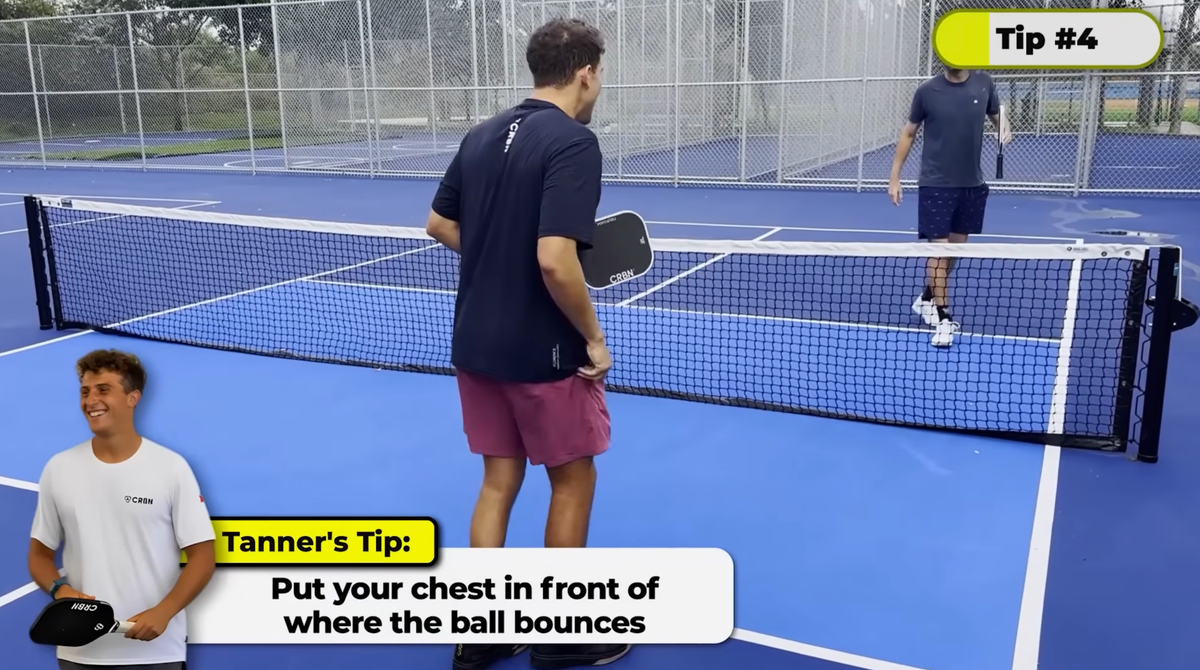
Pickleball Kitchen Line: 6 Skills to Become Unattackable
Tanner Pickleball breaks down how six simple adjustments in positioning and awareness can make you nearly impossible to attack at the kitchen line
 The Dink PickleballThe Dink Media Team
4. Stop Before Your Opponent Hits
Here's where many players go wrong: they charge to the kitchen and then get caught flat-footed when their opponent hits a short return.
Instead, move forward aggressively, but stop just before your opponent makes contact. This gives you time to read what they're doing and react.
If they hit it deep, you can continue advancing. If they hit it short, you're already positioned to handle it.
The timing window is roughly between when the ball crosses the net and about a second before they strike it. Get comfortable with this rhythm, and you'll find yourself in control of more rallies.
💡
Need some new pickleball gear? Get 20% off select paddles, shoes, and more with code THEDINK at Midwest Racquet Sports
5. Vary Your Returns Once You've Mastered the Basics
Once you've nailed the fundamentals, start experimenting. You can hit a slice return with a high-to-low paddle motion, or a lob with a low-to-high motion that gets underneath the ball. The reason? If you hit the same return every time, your opponents will adjust.
By mixing in different spins and depths, you keep them guessing. You might aim deep most of the time, but occasionally go short. You might favor topspin, but throw in a slice. These variations are your secret weapon once the basics are locked in.
How to Beat Bangers in Pickleball Fast
Kelly Goodnow explains how blocking, patience, and smart positioning can turn aggressive “bangers” into beatable opponents
 The Dink PickleballThe Dink Media Team
Frequently Asked Questions
What is the most important part of a pickleball serve return?
Depth is the most important factor. A deep return keeps your opponent back and gives you time to move forward and take control of the point.
Where should I stand when returning serve in pickleball?
Stand a few feet behind the baseline. This gives you space to move through the ball and avoid getting jammed on shorter serves.
Should I hit hard on every pickleball serve return?
No, power is not required for an effective return. Placement and depth are more important than hitting hard.
When should I move forward after a return?
Move forward immediately after contact. Then stop just before your opponent hits so you can react to their shot.
How do I make my pickleball serve return more effective?
Focus on consistency first, then add variation. Mixing spin, depth, and placement will make your returns harder to predict.
Anuncie Aqui / Advertise Here
Sua marca para o mundo Pickleball! / Your brand for the Pickleball world!





 English (US) ·
  Portuguese (BR) ·