
 English
  Spanish
  Portuguese
  German
  Italian
  Japanese
  French
  Polish
  Russian
  Netherlands
  Hungarian
  Turkish
  Videos
  Thedink Pickleball

A strong forehand is the cornerstone of a strong game. If you can develop consistency here, everything else gets easier.
The forehand groundstroke is the foundation of pickleball. It's the shot you'll hit more than any other, especially on serve returns.
But most players never learn it properly. They focus on power or speed without understanding the mechanics that actually control the ball.
Selkirk TV's latest lesson breaks down exactly what you need to know to build a forehand that's both consistent and reliable.
Love pickleball? Then you'll love our free newsletter. We send the latest news, tips, and highlights for free each week.
Pickleball Forehand Mechanics Start With Your Stance
The biggest mistake beginners make is moving their arm first when the ball comes to their forehand side.
Your instinct tells you to reach for it, but that's backwards. Instead, focus on your feet.
When you see the ball heading right, open your right foot and prepare your paddle at the same time. This keeps your balance intact and sets you up for a controlled swing.
Your ready position matters too. Stand athletic and alert, with your paddle held in the middle of your body. You don't know if the next shot is coming to your forehand or backhand, so don't favor one side yet. Once the ball's direction is clear, that's when you turn and prepare.
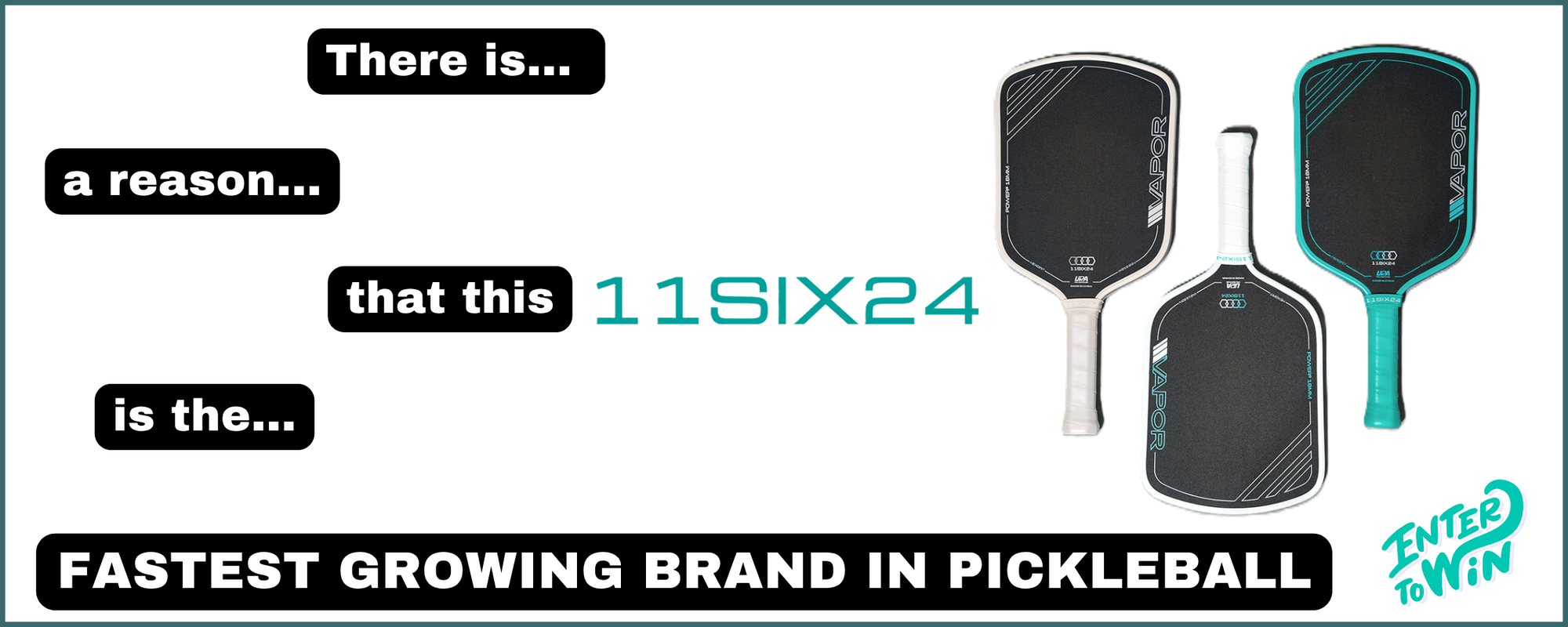
The latest drop from 11Six24 is here — and The Dink is giving you a shot to get one for free.
We’re giving away 10 Power 2 paddles, the hottest new paddle on the market built around a powerful premise: Surface grit that lasts the life of the paddle.
Enter here. And checkout their new Power 2 lineup and get $10 off with code THEDINK.
Three Things Control Your Pickleball Forehand
Once you're in position, three elements determine whether your forehand lands in or out:
- Pathway: Your paddle should move forward and slightly upward, not just straight ahead and stopping abruptly.
- Paddle angle: Keep your paddle face square to the net. An open face sends the ball up; a closed face sends it down. Square is your baseline.
- Speed: Too slow and the ball drops short; too fast and it flies past the baseline. You need the right amount of pace to match your pathway and angle.
All three have to work together. You can have perfect footwork and still miss if your paddle angle is off or your swing speed doesn't match your intention.
Swing Mechanics That Improve Your Pickleball Forehand
Here's a mental shift that changes everything: your job isn't to strike the ball.
Your job is to swing your paddle through a target zone and meet the ball somewhere in the middle of that swing. This means your contact point should be out in front of your stance, not behind it.
When contact happens in front, you maintain balance and control. When it happens behind, your arm gets crowded and you lose both.
Think of the swing in three parts: backswing, contact, and follow-through. The contact is just the midway point of one continuous motion. You're not stopping at the ball; you're moving through it toward your target on the other side of the net.
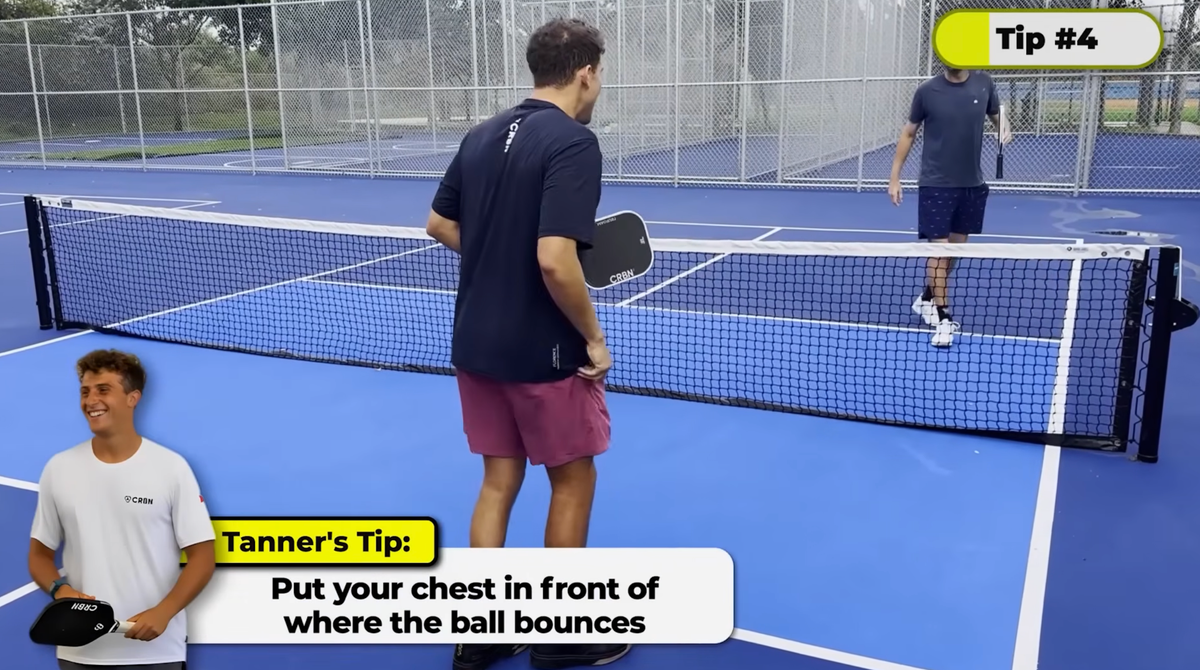
Pickleball Kitchen Line: 6 Skills to Become Unattackable
Tanner Pickleball breaks down how six simple adjustments in positioning and awareness can make you nearly impossible to attack at the kitchen line
 The Dink PickleballThe Dink Media Team
Build Your Foundation With Repetition
The mechanics might seem like a lot to think about at first, but they become automatic with practice. Focus on one element at a time:
- footwork first
- then paddle angle
- then speed
Once those pieces click, you'll notice your control and confidence improve fast.
Mistakes happen. That's part of the process. The key is repetition and staying relaxed throughout the entire swing. Tension kills consistency, so keep your grip loose and your mind focused on the pathway and target, not the ball itself.
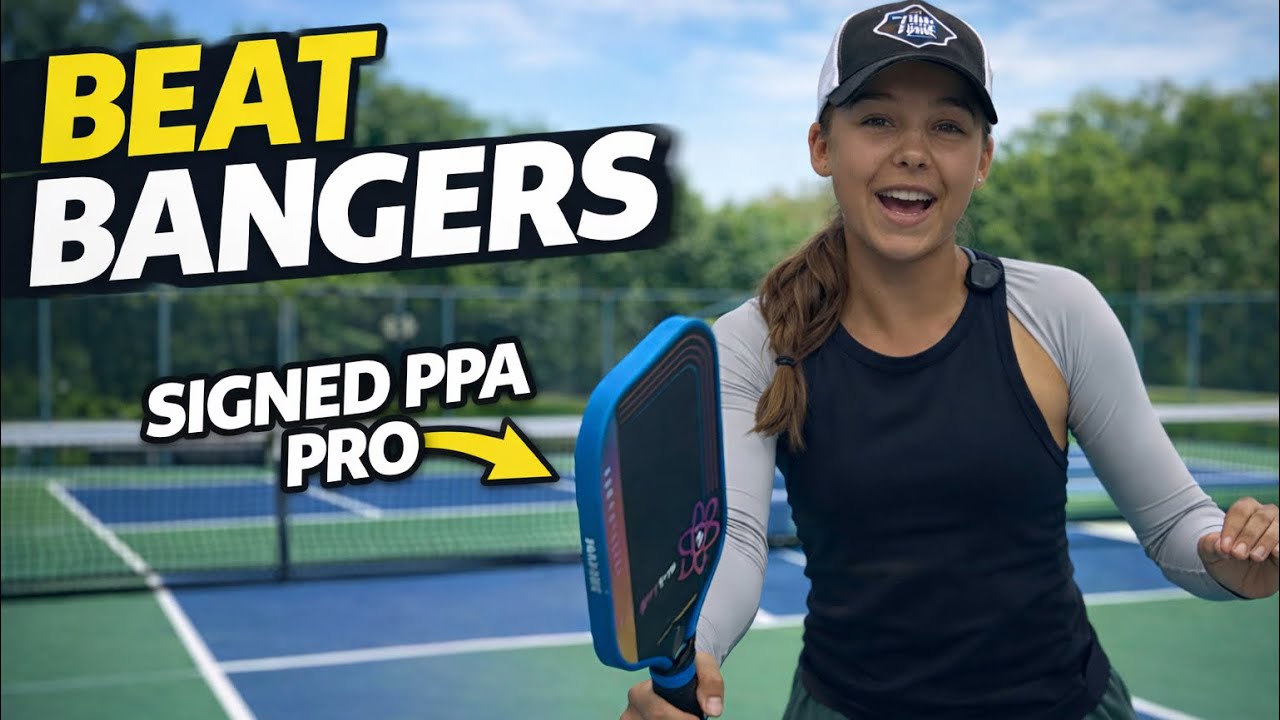
How to Beat Bangers in Pickleball Fast
Kelly Goodnow explains how blocking, patience, and smart positioning can turn aggressive “bangers” into beatable opponents
 The Dink PickleballThe Dink Media Team
Frequently Asked Questions
What is a pickleball forehand?
The pickleball forehand is a shot hit on the dominant side of your body using a forward swing. It is the most commonly used shot in rallies and serve returns.
How do I improve my pickleball forehand consistency?
Focus on footwork, paddle angle, and swing path before trying to hit harder. Practicing these fundamentals repeatedly builds control over time.
Where should I make contact on a pickleball forehand?
You should make contact slightly in front of your body. This helps maintain balance and allows for a smoother follow through.
Why does my pickleball forehand go out of bounds?
Most errors come from incorrect paddle angle or too much swing speed. Adjusting your angle and controlling pace can quickly fix this issue.
How often should I practice my pickleball forehand?
Short, focused sessions several times per week are more effective than occasional long sessions. Consistency in practice leads to consistency in matches.
Anuncie Aqui / Advertise Here
Sua marca para o mundo Pickleball! / Your brand for the Pickleball world!






 English (US) ·
  Portuguese (BR) ·