
 English
  Spanish
  Portuguese
  German
  Italian
  Japanese
  French
  Polish
  Russian
  Netherlands
  Hungarian
  Turkish
  Videos
  Thedink Pickleball

Knowing what to do when you can't reach the kitchen line in pickleball separates streaky players from consistent ones. This guide breaks down the shot selection and footwork fixes that get you out of trouble and keep you there less often.
You hit your third shot, took two steps, and the return is already dying at your shoelaces.
Knowing what to do when you can't reach the kitchen line in pickleball is the difference between surviving the point and handing your opponents an easy put away.
Every player gets stuck back there, even the ones who dial in their net game for a living. The good ones have a plan for it.
Here's the thing. Getting caught in the transition zone isn't a footwork failure most of the time.
It's a decision failure. You panicked, took a swing you shouldn't have, and the ball ended up in the net or popped up for a smash.
A weak third shot drop is usually where the trouble starts.
Fix your positioning before you're ever stuck there and half of this problem disappears.
But you're still going to get caught out sometimes, and this piece is about what happens next.
Love pickleball? Then you'll love our free newsletter. We send the latest news, tips, and highlights for free each week.
Why Do You Get Caught Off the Kitchen Line in the First Place?
You get caught because your feet stopped moving before your shot selection did.
The most common cause is a weak or high third shot that gives your opponents time to attack while you're still walking forward.
A soft, well placed drop buys you three extra steps.
A lazy drive that sits up buys your opponent a free swing at your knees, and cleaning up mediocre dinks and drops solves a surprising amount of this on its own.
Watch enough film and the pattern shows up constantly. Players hit a mediocre third shot drop and then jog to the line like they hit a perfect one.
A better third shot solves most of this before it starts, and understanding the space you're standing in when things go wrong helps everything else on this list make more sense.
What Is the Transition Zone, Exactly?
The transition zone, also called the transition area or no-man's land, is the section of court between the baseline and the non-volley zone line.
It's roughly 10 to 15 feet of real estate where balls bounce at awkward heights and low, dipping shots are hard to control.
Mid court positioning determines whether you're in trouble or in control here.
Standing still in the transition zone is the single riskiest position in pickleball, and getting caught mid-stride when the return comes back fast is exactly how points get lost.
💡
Need some new pickleball gear? Get 20% off select paddles, shoes, and more with code THEDINK at
Midwest Racquet SportsWhat to Do When You Can't Reach the Kitchen Line in Time
Stop trying to sprint the last six feet and swing at once.
The first rule for what to do when you can't reach the kitchen line in time is to stop your feet before you commit to a shot.
A rushed split step beats one that never happens.
Court coverage on the fourth shot depends on picking the boring option, not the highlight reel one, when you're caught out of position.
Anna Leigh Waters, the Soccer Prodigy Who Pickleball Stole
The greatest pickleball player in the world was a soccer prodigy with pro potential. Then another sport came calling, and it was too loud to ignore.
 The Dink PickleballThomas Shields
Should You Reset, Block, or Drive When You Can't Reach the Kitchen Line?
Reset the ball almost every time. A soft, controlled reset shot that dies in the kitchen buys you the time you were missing a second ago.
Blocking works when the incoming ball has real pace, since you're using their power against them rather than generating your own.
Power shots have their place, but not from a moving position.
Driving is the answer maybe one time in ten, and only when the ball sits up high enough to attack safely.
The drive versus drop decision on any transition shot comes down to ball height and your court position, not how frustrated you are about being stuck back there.
Players who drive out of frustration are the same players who lose the point two shots later.
USA Pickleball Launches Long-Awaited Spin Rate Test
“This is an important step in ensuring our equipment standards continue to support fair competition while allowing for responsible innovation.”
 The Dink PickleballAlex E. Weaver
When Should You Just Reset the Ball?
Reset any time the incoming shot has pace, depth, or spin you can't control cleanly.
A proper reset shot absorbs the ball's energy instead of fighting it, and that's exactly the skill that gets you back into a neutral rally instead of a defensive scramble.
There's more than one way to reset the ball depending on what you're facing, so if you're not confident in your reset, that's the shot to drill this week, not your drive.
Kitchen Line Dominance: 5 Secrets From Pro Tyra Black
Tyra’s approach combines footwork, positioning, tactical dinking, and elite hand skills into a system that’s incredibly hard for opponents to break down.
 The Dink PickleballThe Dink Media Team
The Long Term Fix for What to Do When You Can't Reach the Kitchen Line
Shot selection under pressure only gets you so far.
The long term fix for what to do when you can't reach the kitchen line is training your footwork as its own skill, separate from your shots, so you stop needing the emergency reset in the first place.
Better shot selection drills and better footwork need to be trained together, not as separate projects.
Kitchen Strategy 3.5 Pickleball: What to Focus On First
Kitchen strategy 3.5 pickleball players need is less complicated than you think, the gap between a 3.0 and a 3.5 comes down to a handful of repeatable habits at the non-volley zone. Here’s exactly where to focus first so you stop losing points you should be winning.
 The Dink PickleballThe Dink Media Team
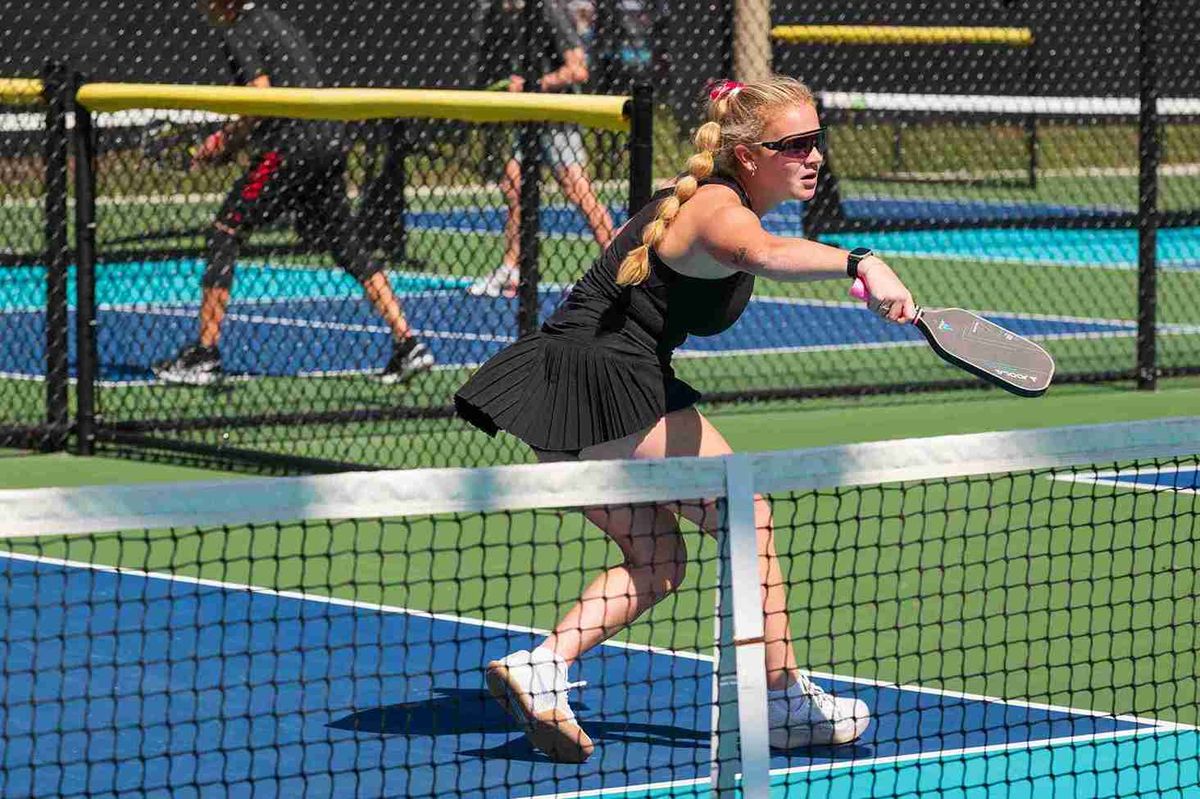
You fix it by training the habit separately from the shot.
The single biggest footwork error at the kitchen line is standing flat footed while the ball is in the air.
A split step timed to your opponent's contact point puts you on the balls of your feet exactly when you need to move.
Solid recovery footwork also depends on your positioning at the net once you arrive, not just how fast you got there.
Good shot selection and good positioning are more connected than most players realize, and players who drift too far side to side after recovering are often just as vulnerable as players who never made it to the line at all.
Most players never isolate this skill. They just hope it improves through match play, and it rarely does fast enough.
Split Step Pickleball: The Ready Position Most Players Skip
The split step in pickleball is a small hop that puts your body in the perfect ready position just before your opponent strikes the ball. Most recreational players skip it entirely, and that single habit is costing them more points than any other technique gap.
 The Dink PickleballThe Dink Media Team
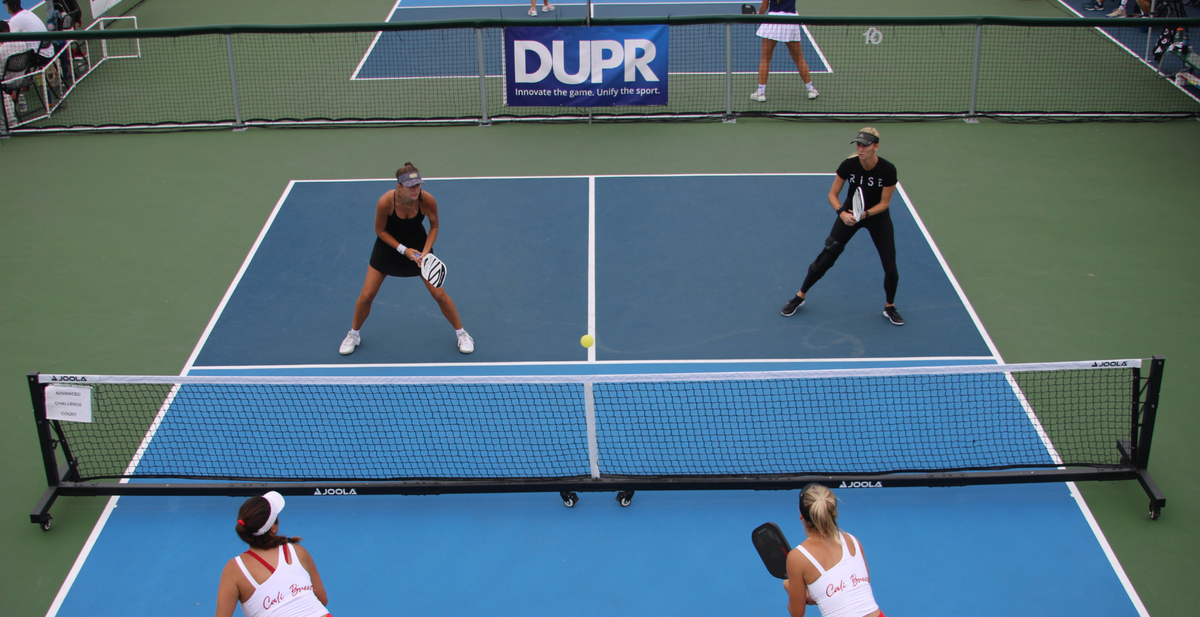
The Best Drill for What to Do When You Can't Reach the Kitchen Line
Run a simple two ball drill.
A partner or ball machine feeds a soft shot to your feet from the baseline, you reset it, then immediately feed you a second ball before you've fully recovered to the line.
This forces the exact scenario that causes trouble in real matches: recovering and hitting under pressure at the same time.
The figure 8 footwork pattern is another excellent option for transition zone speed, since it trains lateral quickness alongside forward recovery instead of just one or the other.
Both drills translate directly to match situations where you're one step behind.
If you don't have a partner available, solo drills built around wall resets and shadow footwork still build the same muscle memory.
Consistency matters more than the format.
Shot selection under pressure also improves when you build in some deception into your transition shots, since disguising a reset as a drive buys you an extra split second even when your feet haven't fully recovered.
Small edges like this add up over a long match.
Off court conditioning matters here too.
Reaction speed and first step quickness both depend on general athleticism, and players who build core strength and mobility consistently close the gap faster than players relying on footwork drills alone.
According to a 2025 review in the Journal of Sports Sciences on reactive agility training in racket sports, athletes who combined agility drills with targeted strength work showed measurably faster first step reaction times than those doing footwork drills in isolation.
That's a direct match for the exact problem this article is solving.
Doubles teams have an added wrinkle worth mentioning.
T formation and sideline spacing decisions change who is responsible for covering the middle when one partner is caught back, and miscommunication here is often what turns one player's bad footwork into a lost point for the whole team.
Serve returns create this exact situation constantly too.
Serving near the kitchen line to draw a weak return is a common tactic worth recognizing, specifically because it puts the returner in the transition zone before the point has even really started.
Once your reset shot is reliable, layer in variety.
Unusual dinking angles and technique variations keep opponents guessing once you've closed the distance back to the line, and sharpening your volley reads at the net finishes the job once you've actually arrived.
None of it matters if the recovery habit isn't there first, which is why the footwork piece comes before the fancy stuff.
Dinking drills that isolate control under fatigue round out the training picture, since a tired reset shot is a weak reset shot, and weak resets are exactly how you end up stuck in the transition zone on the next ball too.
5 Pickleball Dink Drills to Instantly Improve Your Game
Learn how to stop unforced errors, master the ready position, and dominate the non-volley zone to win more matches.
 The Dink PickleballThe Dink Media Team
Key Takeaways
- Stop your feet before you swing. A rushed shot from a moving body is riskier than a controlled shot from a stationary one.
- Reset first, block second, drive rarely. Shot selection under pressure should shrink, not expand.
- Train the transition zone on purpose. Footwork drills that isolate recovery under pressure fix this faster than match play alone.
- Fix positioning before the point starts. A better third shot and better initial positioning prevent most of these scrambles entirely.
💡
Heads up: hundreds of thousands of pickleballers read our free newsletter.
Subscribe herefor cutting edge strategy, insider news, pro analysis, the latest product innovations and more.
Frequently Asked Questions
What is the transition zone in pickleball?
The transition zone, sometimes called no-man's land, is the area between the baseline and the non-volley zone line. It's considered the riskiest place to stand because incoming shots bounce at awkward heights and are hard to control cleanly.
What should I do if I can't get to the kitchen line before the next shot?
Stop your feet, get your weight balanced, and hit a soft, controlled shot rather than trying to attack. A controlled reset buys you the time to finish your approach on the following shot instead of forcing a low percentage swing while still moving.
Is it ever okay to drive the ball while stuck in the transition zone?
Only when the incoming ball is high enough to attack safely and you have a clear target. Most of the time, driving from a moving position produces an unforced error or gives your opponent an easy ball to attack back.
How can I stop getting caught off the kitchen line so often?
Work on split step timing and recovery footwork as a standalone drill, not something you only practice in match play. Pair that with a more aggressive, well placed third shot, since a weak third shot is the most common reason players get stuck back there in the first place.
Does this problem happen more in singles or doubles?
It happens in both, but doubles adds a communication layer since your partner's position affects who needs to cover the middle when you're caught back. In singles, the entire court is your responsibility, so recovery footwork matters even more.
Anuncie Aqui / Advertise Here
Sua marca para o mundo Pickleball! / Your brand for the Pickleball world!






 English (US) ·
  Portuguese (BR) ·